ENSV

Atlantic salmon

Atlantic salmon — Salmo salar

Atlantic salmon occurs in selected Swedish rivers and in the seas surrounding Sweden. This guide explains the connection between river and sea populations and why fishing rules must be checked for each specific area.

What should I know about Atlantic salmon in Sweden?

Atlantic salmon (Salmo salar) occurs in selected Swedish rivers and in the surrounding seas. Sweden also has landlocked relict populations in Lake Vänern. Population status differs between rivers and marine areas, and fishing regulations can vary by place and season.

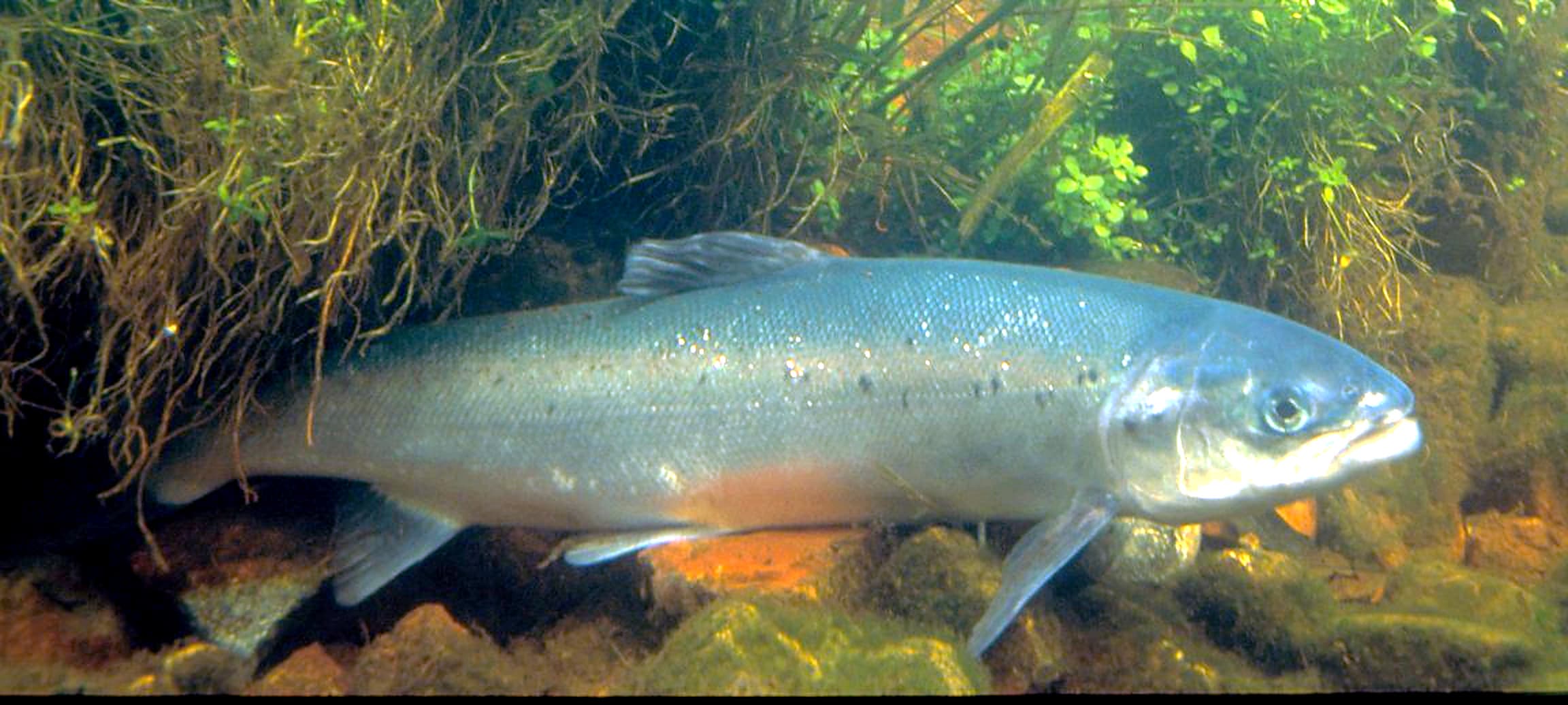
A salmon swimming near the streambed in clear water, showing a slender silvery body with sparse dark spots above the lateral line.
Hartley, William W. (U.S. Fish & Wildlife Service)

Source: Swedish Agency for Marine and Water Management: Atlantic salmon – species and habitats · Last verified: 8 September 2026

Stock status and fishing regulations are dynamic and differ between rivers, marine areas and years. Always check current official information.

Where Atlantic salmon occurs

The Swedish Agency for Marine and Water Management states that salmon occurs in selected rivers and in all seas surrounding Sweden. Landlocked relict populations also occur in Lake Vänern.

A life cycle connecting rivers and sea

Salmon depends on both freshwater and marine environments during its life cycle. Conditions in individual rivers as well as the Baltic, Atlantic and Lake Vänern systems can therefore affect different stocks.

Wild salmon stocks

The agency reports around 40 wild salmon stocks in Sweden, meaning naturally reproducing stocks without stocking of juvenile salmon. Their status and health can differ between rivers and years.

Fishing rules are local

Fishing regulations for salmon can include minimum sizes, closed seasons, catch restrictions and area-specific rules. Always check current official rules for the exact place and time of your fishing.