ENSV

Eurasian lynx

Eurasian lynx — Lynx lynx

Eurasian lynx is Sweden’s only wild cat and uses large home ranges. This guide explains reproduction, diet and movement, while treating population counts as time-bound monitoring results rather than permanent facts.

What should I know about Eurasian lynx in Sweden?

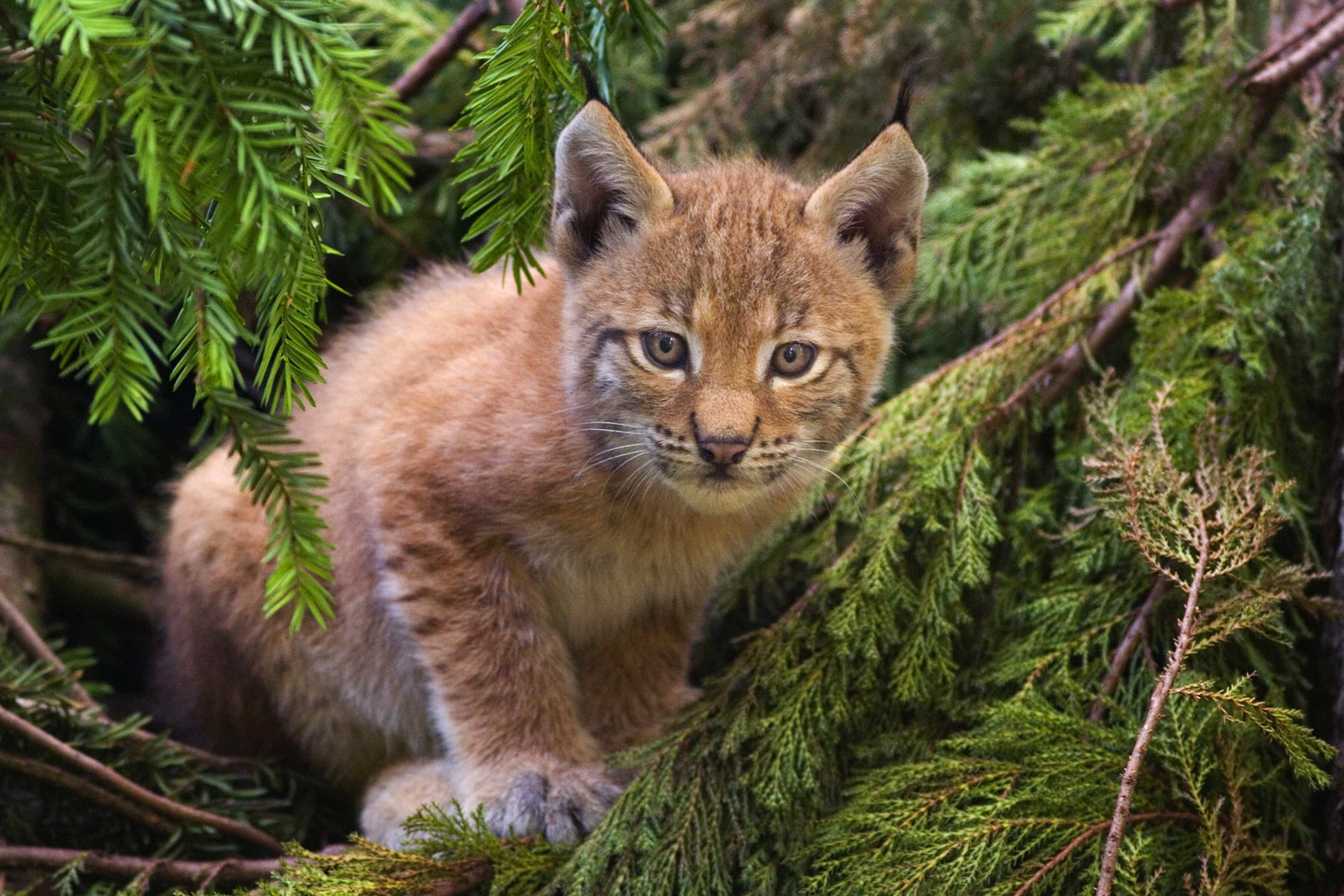
Eurasian lynx (Lynx lynx) again occurs across much of Sweden. Kittens are generally born around May–June and remain with their mother for many months. The species uses large home ranges and primarily takes ungulate prey, with regional variation.

A Eurasian lynx kitten with tufted ears and spotted golden-brown fur, sitting among green conifer branches.
Bernard Landgraf

Source: SLU: Lynx facts; Swedish Environmental Protection Agency: lynx monitoring 2025/26 · Last verified: 8 September 2026

Population estimates change between annual inventories and are not presented here as durable numbers.

Recovery in Sweden

SLU describes the recovery of lynx following protection in 1927. Today the species occurs throughout Sweden except on Öland and Gotland.

Kittens and family life

Kittens are born around late May or early June, with litter sizes of one to four according to SLU. They generally stay with their mother for around 9–11 months.

Large home ranges

Lynx uses large home ranges. Male ranges are generally larger than female ranges, and young males tend to disperse farther than young females.

Diet varies by region

SLU identifies roe deer as important prey in much of Sweden, while reindeer is a key prey species within the reindeer-herding area.